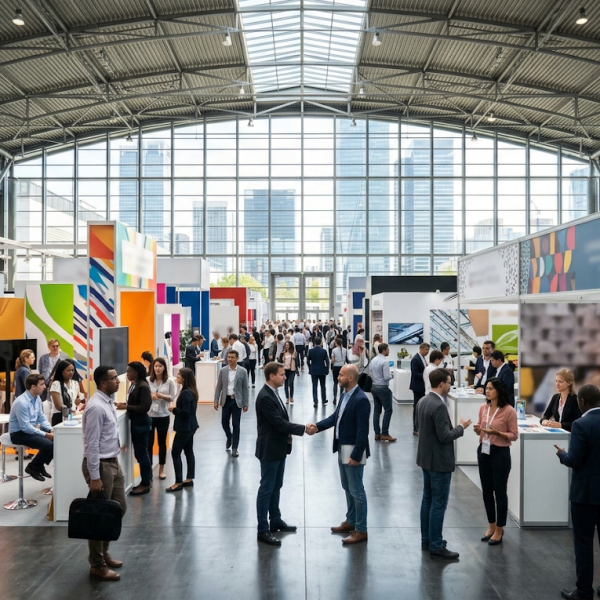
Frankfurt is a city of banks, airports and trade fairs, and every year it welcomes visitors from around the world who come to sign deals, meet suppliers and discover new products. English is widely spoken in its business districts, but that does not mean that every conversation, contract or brochure can safely be handled in one language. German remains the language of law, administration and many industries, and exhibitors who prepare their materials in German often gain trust and attention. Successful trade fair participation depends on language planning, from the first brochure to the last follow-up email. This article offers practical advice for companies that want to present themselves well at a German trade fair or in a business meeting in the region.
Plan Your Language Needs Early
Start months before the event. List all materials that visitors will see, such as stand graphics, brochures, product sheets, presentations, videos, websites and business cards. Decide which languages are needed for each item, based on the target audience and the fair's profile. International fairs organised by bodies such as Messe Frankfurt attract visitors from many countries, so English will be essential, while German materials help to win local distributors and customers. Assign a person to coordinate translation, and set deadlines that leave time for review and printing.
Brochures, Catalogues and Technical Data
Technical buyers read details. Product data sheets, certificates and manuals should use the correct terms, units and standards of the German market. Measurements, voltage, norms and safety marks must match local expectations. Translations should be consistent with your website and your price lists, since conflicting information damages credibility. A glossary of product names and technical terms helps translators to keep the language uniform. If a document is long, prepare a short German summary for the stand, with a link or code that leads to the full version online.
Stand Graphics and Slogans
A trade fair stand has seconds to attract attention. Headlines must be short, clear and attractive in German, and literal translations rarely achieve this. Ask a translator with marketing experience to propose alternatives and to check that slogans do not carry unintended meanings. Plan space for longer German words, which can break layouts and reduce the size of letters. Proofread printed graphics with great care before production, because mistakes on large banners cannot be fixed on the spot, and they are visible to every visitor.
Hiring Interpreters for Meetings
Even when your team speaks some German, important negotiations deserve professional support. A trained interpreter helps you to understand details, avoid misunderstandings and keep a polite tone. Decide whether you need consecutive interpreting for small meetings or simultaneous interpreting for presentations. Brief the interpreter in advance, and share product information, names and objectives. To learn how translation differs from other language services, read this overview of German to English translation explained, which clarifies what to expect from each professional.
German Business Culture and Language
German business communication values precision, punctuality and clarity. Formal address with Sie is the norm in first meetings, titles are respected and emails are structured. Overly enthusiastic marketing language can sound exaggerated, so adapt the tone to be factual and concrete. A provider of german translation can help you adapt both content and style, from catalogues to follow up proposals, so that your company looks reliable and professional to local partners.
Contracts and Legal Documents
After a successful fair, agreements follow. Distribution contracts, confidentiality agreements and terms of sale have legal consequences, and their translation should be handled by specialists. German law has specific concepts that may not match those of other systems, so involve a lawyer who knows both. Decide which language version will prevail, and have the final texts checked by a bilingual expert. Keep a record of all drafts and approvals, so that you can show what was agreed if a question arises later.
Digital Follow Up
The conversation does not end when the fair closes. Send personal follow up messages within days, in the language that the contact used or preferred. Translate your website landing pages, newsletters and social media posts for the visitors you met. Collect business cards and enter them into your system with correct spellings, including umlauts and special characters. Quick, accurate follow up shows professionalism and turns brief meetings into lasting business relationships.
Measure and Learn
After the event, review what worked. Which materials were requested most? Which languages did visitors use? Which questions caused confusion? Collect feedback from staff and interpreters and update your glossaries and templates. Use the lessons to plan the next fair more efficiently. With early preparation, qualified linguists and respect for local culture, your company can make a strong impression, build trust and open doors in one of the most important business regions in Europe.
Travel, Logistics and Local Support
Small practical details matter during a fair. Book accommodation early, since prices rise sharply during big events, and arrange transport between the hotel and the exhibition centre. Keep a card with useful German phrases for taxis, restaurants and the stand, and save the address of the hall in German script on your phone. If you ship samples, prepare customs documents in German as well as English, and carry copies of invoices and certificates. A little preparation keeps the team calm and focused on the visitors.